Recently in Media Category

Dept. of Awesome Old Ads

| 1 Comment

Mieville on Abrams

| 1 Comment

This seems just about right to me:

I've never met [JJ Abrams]. I am not a member of his fan club or anti-fan club. I disliked Cloverfield a very great deal. I disliked Star Trek intensely. I thought it was terrible. And I think part of my problem is that I feel like the relationship between JJ Abrams' projects and geek culture is one of relatively unloving repackaging - sort of cynical. I taste contempt in the air. Now I'm not a child - I know that all big scifi projects are suffused with the contempt of big money for its own target audience. But there's something about [JJ's projects] that makes me particularly uncomfortable. As compared to somebody like Joss Whedon, who - even when there are misfires - I feel likes me and loves me and is on some cultural level my brother and comrade. And I don't feel that way about JJ Abrams.

Dear Site Owners: Do Not Do This

| No Comments

It's funny because it's true:

Best Little Golden Books EVAR

| No Comments

Over at Kotaku.

Dear every "Email Marking" firm ever

| No Comments

You're a spammer. Stop it. I'm looking at you Mobile Storm, but also pretty much any other firm that sends mail to a list provided by other people.

Longtime Heathen Chris Mohney has produced what may be the definitive piece of criticism about the shock-horror film The Human Centipede. Don't miss this. (SFW.)

They just want your data, and they'll use it any way they like. Gizmodo has ten reasons you should quit now.

The New York Times profiles David and Barbara Mikkelson, perhaps better known to you as the couple behind the granddaddy of all rumor and gossip debunking sites, Snopes.com.

Oh, Fox. Stay classy.

| No Comments

Fox has got Sarah Palin tied to some interview show, but they're using interviews conducted quite some time ago by people other than Palin as filler. Douchey, right? It gets better: it turns out some of those interviewees aren't too keen on being associated with Palin. One of the folks they picked was LL Cool J, who took exception to his association with the rightwingnut on Twitter:

Fox lifted an old interview I gave in 2008 to someone else & are misrepresenting to the public in order to promote Sarah Palins Show. WOW

Fox responded with predictable maturity:

Real American Stories features uplifting tales about overcoming adversity and we believe Mr. Smith's interview fit that criteria. However, as it appears that Mr. Smith does not want to be associated with a program that could serve as an inspiration to others, we are cutting his interview from the special and wish him the best with his fledgling acting career.

Note their absolute insistence on missing the point (LL doesn't want to be associated with Palin, or with an enterprise that makes money for Palin); they instead suggest he's somehow anti-hero. But the best part is their persistent usage of "Mr. Smith" (LL's actual name is Jason Todd Smith), and their junior-high mean-girls-bitchy crack about his "fledgling" acting career. News flash, Fox: LL started acting before you existed; his first credit is from 1986. But we know how hard it is for Fox News to do something as basic as check facts, so knock yourself out.

Now it appears that Toby Keith is also not happy about his inclusion. DeLIGHTful.

Christoph Waltz Wins

| No Comments

Not just the Oscar. Also The Funny.

(Sidenote: It's astonishing how quickly web memes find their way into mainstream TV comedy now.)

Once again, the Onion rules.

| No Comments

Nation Shudders At Large Block Of Uninterrupted Text:

WASHINGTON—Unable to rest their eyes on a colorful photograph or boldface heading that could be easily skimmed and forgotten about, Americans collectively recoiled Monday when confronted with a solid block of uninterrupted text.

Dumbfounded citizens from Maine to California gazed helplessly at the frightening chunk of print, unsure of what to do next. Without an illustration, chart, or embedded YouTube video to ease them in, millions were frozen in place, terrified by the sight of one long, unbroken string of English words.

"Why won't it just tell me what it's about?" said Boston resident Charlyne Thomson, who was bombarded with the overwhelming mass of black text late Monday afternoon. "There are no bullet points, no highlighted parts. I've looked everywhere—there's nothing here but words."

Go read all of it.

Apparently, Edison was a dick

| No Comments

Check it out:

You a big fan of aggressive IP enforcement? Like to think a well-litigated market is a healthy market? Hate those little entrepreneurial nuisances like “competition from emerging media?”

Well, then, you would have loved the early 20th century.

Because you had to get Thomas Edison’s permission to make any movie. Then you had to pay him.

Read the whole thing.

Sofa King Awesome

| No Comments

On the March 4 show, The Daily Show did a really, really stellar segment on Chatroulette. Do NOT miss this; starts at about 8:00 in.

Go Read This.

| No Comments

Paul Graham's Why TV Lost sums up quite a bit that I've been talking about for years. Incumbent media have been caught flat-footed by the Internet for ten years, and they're not getting any better at adapting because they still think of it as something they can compete with rather than capitalize on.

Sigh. RIP, WSJ.

| No Comments

Apparently, greenscreening is way, way, way more common than you think.

Only Slightly Less Literate Than Fox

| No Comments

Juggalo News Network should not be missed.

(Context here.)

Behind the Man Your Man Could Smell Like

| 2 Comments

Here's a surprise: everything in the ad is real (or, at least, physical) with the exception of the diamonds/magically-appearing bottle. Yes, even the horse.

Oh, and the dude? Former NFL receiver Isaiah Mustafa.

Look at me. I'm on a horse.

| No Comments

THE MAN YOUR MAN COULD SMELL LIKE.

As if there was any doubt

| No Comments

The Beast has its 50 Most Loathsome People of 2009 up; can there be any doubt who has earned the top spot?

  1. Glenn Beck

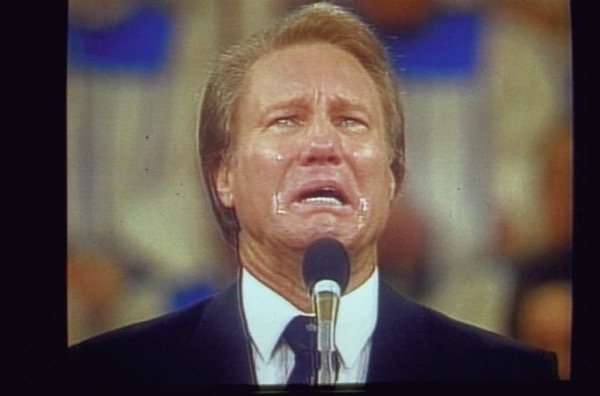
Charges: As the Sybil of cable punditry and graduate of the prestigious University of I Don’t Remember, Beck’s bipolar professor routine is hands down the funniest thing on TV. When he gets out the chalkboard and starts drawing trees and playing misspelled word association games with a comically grave demeanor, Beck makes Stephen Colbert look like a piker. The fact that millions of Americans think he knows what he’s talking about, however, is not funny at all. If this simpering boob, blubbering the same old reds-under-the-bed melodrama from the ‘50s with a sophomoric Da Vinci Code twist, is the face of the people’s rebellion, sign us up for the empire.

Exhibit A: “This president has exposed himself as a guy, over and over and over again, who has a deep-seated hatred for white people or the white culture… I’m not saying that he doesn’t like white people.”

Sentence: Drowned in crocodile tears; eaten by crocodile.

Today's Pop Culture Assertion

| No Comments

In addition to her output as both a solo artist and as part of the Dresden Dolls, and also in addition to her choice of companion, there is much to love about Amanda Fucking Palmer.

Click through to Palmer's own review of the event as well, which provides context for some of the shots reproduced on Fug and elsewhere.

My favorite part: Neil's own summary:

2) I went to the Golden Globes for Coraline. We lost. But we lost to Up! so no surprise there. Amanda, who was with me, wore a classic 1920s beaded dress with very little underneath it, and nobody noticed me at all. The Golden Globes were interesting. The strangest moment was as we were leaving the NBC party, the photographers grumbled that they hadn't got any photos of us going in, so we agreed to pose for them... and when they complained that Amanda was no longer wearing the amazing beaded dress she'd worn on the Red Carpet, she changed back into it for them (with me holding up a jacket as a makeshift changing area -- the area was deserted but for photographers). They took photographs. (When shot with a flash the dress looks a lot more naked than it did when I was standing next to her.) My favourite bit was that when the photos appeared Amanda was named and I was listed as "and guest".

The eventual widespread digital distribution of books and other media is taken now as a foregone conclusion; the modest success of products from Sony, Barnes & Noble, and (notably) Amazon put the issue in the public eye initially, but the biggest splash came last week with Apple's introduction of the iPad -- a category killer almost for sure, given its additional capabilities over its e-reader competitors and its likely ability to consume books from both its own store and Amazon's Kindle store. (There's a Kindle app for the iPhone already.)

Also very public at this point is the spat between Amazon and publishing house Macmillan over ebook pricing. Amazon wanted to hold the line at $9.99, but the publisher wanted half again more; the situation devolved enough that Amazon actually delisted all physical and electronic copies of Macmillan books for the duration of last weekend, and has in fact still not reinstated all of them despite acquiescing to Macmillan's demands.

The whole situation reminds many of the sturm und drang surrounding the widespread adoption of MP3 players, and the resultant rush to find ways to sell music online. There, too, we find Apple at the forefront (it's a safe bet to assume that, with the Kindle, Jeff Bezos and Amazon were hoping to imitate Apple's musical success in the ebook market). A quick survey of the history here might lead you to believe that the book situation will evolve similarly, but I for one am not completely convinced, at least not with the current pricing and parameters.

Let's look at music for a moment and consider what's gone before, and then see how that applies to books.

How I Learned to Stop Worrying and Love the MP3

Ten years ago, only serious nerds had any kind of digital music collection. The market was anybody's, and it stayed that way until "anybody" became "Apple." Not the first or even most feature-laden MP3 player, the iPod instead represented the first one normal people actually bought to use.

Back then, there was no legal online music; you bought your CDs and ripped them at home, using one of several formats (most famously MP3, but AAC and Ogg and WMA are out there, too), before using some purpose-built software to copy those files to your player. It was a bit of a hassle, but high-capacity players like the iPod made the tedium pay off in your ability to carry hundreds of albums around with you all the time.

Then people started selling music online. The most successful, obviously, was Apple, at the benchmark price of $0.99 per track. This price mirrored, on average, what we pay for CDs in music stores -- most albums have 10 to 15 tracks, and we pay $10 to $15 for a CD.

I bought very, very little of this music. Why? Because the seller was giving me a less useful product, but hadn't lowered the price. By buying digitally in those days, I was getting locked-down, DRM'd music at a limited bitrate that would only work with one firm's devices. Apple's approach was more benign than some, but it was still a pain, and it limited what I was willing to buy. One-off, single song purchases to satisfy an earworm? Sure. Some top-40 crap I'm pretty sure I won't care about in 5 years? Absolutely. But for anything real that I actually cared about, I bought a CD -- and in so doing, I acquired a few more things for my money:

  • A physical artifact. This may be a boon or a bust, depending on your POV.

  • The ability to easily format shift -- despite trying, nobody ever made a genuinely unrippable CD, which means every one sold will play in any CD deck, and can be ripped into any digital format I want.

  • Additional fidelity. Early digital music was at lower bitrates, which produced slightly lower quality than actual CDs. This doesn't matter for most people (or for headphones), but I have a nice enough stereo that naive, non-nerdy listeners can usually tell a low-bitrate MP3 from CD source.

Since the digital and physical prices were the same, a digital purchase gave me less for the same money. That's a bad deal, so I behaved accordingly.

In the years since, a couple interesting things have happened:

  • Nobody is selling music with DRM on it anymore (not counting streamed, subscription services, which are a different creature). Music bought from Amazon or Apple is actually yours, and can't be turned off or zapped remotely anymore.

  • Most digital sources are offering higher bitrate files, essentially indistinguishable from CD source even on nice stereos.

  • Some "digital albums" come with extras, like booklets and linernotes and even videos, which helps create a better "album purchase" experience and make up for the lack of a physical object. We still lack that, but, as I noted, this can be seen as a feature or a bug, depending on your POV.

Consequently, I now buy most of my music online, generally from Apple or Amazon. The price is about the same as physical, but what I get (easier storage and retrieval, immediate gratification) is a fair trade vs. what I give up (the need to store a physical CD, some theoretical level of fidelity).

Why this won't happen for books

The music market, though, has a couple fundamental differences from the book market.

  • With music, I don't have to choose one format over the other. Format shifting is simple. A physical CD can be ripped for use on my iPod; a digital album can be burned to CD to play in the car. You can't easily go either way with books: if you want a digital copy, give up reading it in the bath. If you want a physical copy, prepare to give up space in your carryon. If you want both, they want you to pay twice. Fuck that.

  • In contrast to the modern e-music market, the book market remains a DRM'd wasteland. If you buy content with rights-management crap attached, you don't own it. You only get to use it (legally) as long as the DRM vendor thinks it's okay. If the authorization servers go kaput, your content may not work anymore. (More here.) Amazon made this abundantly clear when, after a rights dispute, they removed books that people had purchased from their Kindles. Apple will be no better in this regard.

  • Notwithstanding the prior points, publishers are working hard to ensure the ebook price is nearly the same as a hardback despite the fact that the electronic versions are, for all practical purposes, defective by design.

It seems clear to me that selling me (or, rather, renting me) an inflexibly formatted version of a book is worth vastly less money than a robust, flexible, physical tome I can keep in my house forever, loaning or reselling as I see fit.

Adding to this absurdity is the fact that, for books (just as with CDs), the physical aspect of the artifact is responsible for a huge chunk of the final cost. Books must be printed and shipped all over the place, and then (potentially) shipped back for remaindering. None of this is true with digital distribution; this, to me, means that the publishers' attempts to push ebook prices to hardback parity are nothing more than transparent attempts to screw the consumer. (I'm all for authors and musicians getting paid, but let's be honest: the middleman here is the guy who needs to justify his share of the deal, not the content creator. If ebooks get real traction and free writers from the need to use a printing press and physical distribution network, we'll see more authors disintermediating the publisher just as more and more bands skip the exploitative deals that used to define pop music success.)

This matters more to me for books because, at the end of the day, I give up little functional utility with a digital music purchase -- it's more or less the same to me. As outlined above, though, ebooks suck compared to physical ones, and can't ever be "mine" in any real sense that matters under the current terms of the deal.

Would I buy DRM'd, limited-use ebooks at any price? Sure. But that price needs to be much, much lower than even the $9.99 Amazon was pushing for. Maybe none of this matters for some use cases -- you're a voracious consumer of disposable paperbacks you inevitably sell to Half Price Books just to get 'em out of the house, or you travel as much as I did this summer -- but for general reading, it's a complete nonstarter.

It'll be interesting to see how quickly folks realize this, and how the market evolves.

A final note: Something that I would buy, and that I think people would be interested in, is nondiscounted hardbacks (at what, $25?) that include the digital edition. That way, I'd get format shifting if i wanted it, I'd get loan-ability and shelf appeal and fault-tolerance, but I'd also get the portability and searchability that digital books excel at. But you can be sure that, in such a situation, I'd have zero interest in paying $15 for it on top of a $25 hardback.

British and, yet, still true

| No Comments

Turns out, Glenn Beck is a plagiarist

| No Comments

And his riff is 100% lifted from The Kids In The Hall and Dave Foley.

Guidette Evolution

| No Comments

Alyssa Milano goes to the Shore.

(This provides some much needed context.)

He's the face of LG's new Before You Text, wherein he lends his mighty beard to those at risk of committing SMS faux-pas. Literally.

Note.

| No Comments

You should not confuse Southern culture, food, and writing glossy Garden & Gun with essential zombie apocalypse do-it-yourself show Guns 'n Gardens.

I've been very pleased that the Obama White House has called it like it is and declared that Fox isn't really a news organization. That's been abundantly clear to anyone with a brain for a long, long time -- after all, we're talking about a group that went to court to protect their right to lie in the news, right? A group that sponsors Teabagging protests, and that was an active cheerleader for even the most egregious Bush-era atrocities. It's not a point of debate.

What's been shocking is that the rest of the mainstream media -- the parts that are supposedly "liberal" -- have basically just started parroting Fox's own talking points on the subject.

Gawker's Jezebel has a great summary of the whole affair:

Even if MSNBC does have a liberal bias in its news reporting (as opposed to its opinion and analysis) — for our purposes here, I'll even stipulate that it does — it's still comparing apples and rotting, bug-infested oranges. The problem is not that Fox News leans a bit to the right (in my opinion, so does CNN and so does half the "liberal" opinion on MSNBC), but that they consistently violate principles of journalistic ethics as if that is, in fact, their primary goal and they're systematically working through a checklist. It's not that they editorialize; it's that they lie. It's not that they sympathize with right-wing whackjobs, it's that they sponsor them. You want to have a conversation about media bias on both sides, that's fine, but you cannot have an intellectually honest version of that discussion if you begin with the premise that Fox and MSNBC are equally outrageous in their departure from objectivity and distortion of the facts — or, you know, "the fiction that Fox News is a traditional news organization."

It's convenient for folks at CNN to pretend that the two are equivalent, since that makes them look like the one cable news outlet that gives a damn about balanced reporting. But such an assertion actually betrays both bias and bull on their part (even if the bias is chiefly toward their own profits). Fox News has consistently displayed such a flagrant lack of concern for facts, balance and integrity, any journalist with the slightest pretension to objectivity should be mortified by the mere thought of defending them.

Fox is not news organization. Period. It's a partisan extension of the right wing of the Republican party, and it has no right to the courtesy typically extended to nominally fairminded journalists. Their slogan "fair and balanced" is so brazen as to be Orwellian, and to defend them as somehow equivalent to CNN or MSNBC in their slant is to betray your own fundamental misunderstanding of words like "truth" and "journalism."

The fact that Campbell Brown is whining about the White House's treatment of Fox doesn't suggest the Obama Administration is wrong; it suggests that Brown is nearly as shoddy a "journalist" as anyone at Fox. Fox is a major part of the problem, but it's a problem that extends to all broadcast media today. So-called journalists have abandoned their traditional investigative, critical role in favor of a bullshit "present the controversy" approach that reaches its apotheosis when birthers like Orly Taitz are given airtime to suggest Obama isn't actually a citizen.

Controversy may sell ads, but the responsibility of a news desk is to present facts. Countering the views of epidemiologists with Jenny McCarthy babbling about vaccinations and autism, and providing no voice of reason, is simply malpractice. And that's what's happening with the Fox vs. Obama coverage.

Jon Stewart: Still Our Hero

| No Comments

CNN, for some reason, decided to fact check an SNL skit. And Jon Stewart was there, thank God, to point out just how asinine this is -- especially since CNN does essentially no fact checking on assertions made on their network without citation or backup by partisan pundits selling their POV.

Which, you know, used to be considered the function of journalism.

But stay on that SNL thing, for God's sake.

Twitter Etiquette idea #1

| 2 Comments

All this stuff is new, and we're still figuring our way around with it, but an idea has gelled in my head that I think makes sense. It's a small thing, but it feels true.

Let's say you're the head of some enterprise, and that you're a savvy user of social networks. Odds are, you'll find a way to use that savvy to help your business or nonprofit or group or whatever; that's great, and it's a good idea, but there are good and bad ways to do it.

You might, first, start hawking CoolCorp on your personal tweets. Lots of people do. No harm in this, really, except that it sort of assumes that everyone who follows you for your pithy 140-byte commentary also wants to get all CoolCorp material. Who knows? It might be true. But probably not.

A better idea is to establish @CoolCorp as a twitter entity of its own; post your work stuff, your marketing messages -- let's face it: your advertising -- there, and keep your personal @account for your personal content.

This seems to be an especially popular model, with good reason; people who want just-you can get just-you, and people who want to also get your advertising can do that, too -- but you're not making assumptions about how interested your Twitter friends are about your business endeavors. Think of it as channels.

Further, not even all your CoolCorp fans want to use the Twitter feed to keep up -- if you've done it right, that info is also available in newsletters, in blog updates or RSS feeds, or in a variety of other ways.

What's sort of annoying is if you establish @personal and @CoolCorp, but then consistently ReTweet all or most of the CoolCorp posts into your personal feed, too. People who want that info are going to get it anyway (see above about your newsletter, your blog, your feeds). Persistent retweeting makes the @clubcorp feed pointless -- if that info is everywhere anyway, why bother following the account? You'll just get dupes for all or most of the material.

BTW, you can magnify this problem by having multiple Twitter users in the office, all of whom also retweet the corporate info. Don't be that guy, for God's sake. Create a Twitter identity for your firm, and make it valuable enough on its own that people want to follow it. If you're consistently putting the same info out in multiple accounts, odds are you're wasting your time.

Your afternoon: Gone.

| 2 Comments

The Best of Wikipedia is gonna eat it.

Ah, the crazy

| No Comments

Noticing how completely off the rails much of the Right is over Obama's victory and, now, the health care proposals? Yeah, us too. While we on the left complained about specific Bush admin policies (some of which, frustratingly, persist under Obama), the Right is mostly just making shit up.

Here's two bits worth reading on the subject:

In America, Crazy Is A Pre-existing Condition, from the WaPo, discusses how the right tends to go off the rails like this with some frequency. Kennedy was accused to sabotaging our defense when he pushed for missiles over bombers, for example.

The instigation is always the familiar litany: expansion of the commonweal to empower new communities, accommodation to internationalism, the heightened influence of cosmopolitans and the persecution complex of conservatives who can't stand losing an argument. My personal favorite? The federal government expanded mental health services in the Kennedy era, and one bill provided for a new facility in Alaska. One of the most widely listened-to right-wing radio programs in the country, hosted by a former FBI agent, had millions of Americans believing it was being built to intern political dissidents, just like in the Soviet Union.

So, crazier then, or crazier now? Actually, the similarities across decades are uncanny. When Adlai Stevenson spoke at a 1963 United Nations Day observance in Dallas, the Indignation forces thronged the hall, sweating and furious, shrieking down the speaker for the television cameras. Then, when Stevenson was walked to his limousine, a grimacing and wild-eyed lady thwacked him with a picket sign. Stevenson was baffled. "What's the matter, madam?" he asked. "What can I do for you?" The woman responded with self-righteous fury: "Well, if you don't know I can't help you."

The various elements -- the liberal earnestly confused when rational dialogue won't hold sway; the anti-liberal rage at a world self-evidently out of joint; and, most of all, their mutual incomprehension -- sound as fresh as yesterday's news. (Internment camps for conservatives? That's the latest theory of tea party favorite Michael Savage.)

This is all entirely depressing, since it makes clear that the cynics on the Right have always been willing to exploit fear with lies as long as it serves their interests, and the media is all too willing to feed this cycle because it leads to viewers; they're entirely too milquetoast to actually label bullshit when they see it.

Conservatives have become adept at playing the media for suckers, getting inside the heads of editors and reporters, haunting them with the thought that maybe they are out-of-touch cosmopolitans and that their duty as tribunes of the people's voices means they should treat Obama's creation of "death panels" as just another justiciable political claim. If 1963 were 2009, the woman who assaulted Adlai Stevenson would be getting time on cable news to explain herself. That, not the paranoia itself, makes our present moment uniquely disturbing.

It used to be different. You never heard the late Walter Cronkite taking time on the evening news to "debunk" claims that a proposed mental health clinic in Alaska is actually a dumping ground for right-wing critics of the president's program, or giving the people who made those claims time to explain themselves on the air. The media didn't adjudicate the ever-present underbrush of American paranoia as a set of "conservative claims" to weigh, horse-race-style, against liberal claims. Back then, a more confident media unequivocally labeled the civic outrage represented by such discourse as "extremist" -- out of bounds.

The tree of crazy is an ever-present aspect of America's flora. Only now, it's being watered by misguided he-said-she-said reporting and taking over the forest.

Then, an outsider's view from the Independent:

Since Obama's rise, the US right has been skipping frantically from one fantasy to another, like a person in the throes of a mental breakdown. It started when they claimed he was a secret Muslim, and – at the same time – that he was a member of a black nationalist church that hated white people. Then, once these arguments were rejected and Obama won, they began to argue that he was born in Kenya and secretly smuggled into the United States as a baby, and the Hawaiian authorities conspired to fake his US birth certificate.

[...]

This trend has reached its apotheosis this summer with the Republican Party now claiming en masse that Obama wants to set up "death panels" to euthanise the old and disabled. Yes: Sarah Palin really has claimed – with a straight face – that Barack Obama wants to kill her baby.

You have to admire the audacity of the right. Here's what's actually happening. The US is the only major industrialised country that does not provide regular healthcare to all its citizens. Instead, they are required to provide for themselves – and 50 million people can't afford the insurance. As a result, 18,000 US citizens die every year needlessly, because they can't access the care they require. That's equivalent to six 9/11s, every year, year on year. Yet the Republicans have accused the Democrats who are trying to stop all this death by extending healthcare of being "killers" – and they have successfully managed to put them on the defensive.

Precisely.

This tendency to simply deny inconvenient facts and invent a fantasy world isn't new; it's only becoming more heightened. It ran through the Bush years like a dash of bourbon in water. When it became clear that Saddam Hussein had no weapons of mass destruction, the US right simply claimed they had been shipped to Syria. When the scientific evidence for man-made global warming became unanswerable, they claimed – as one Republican congressman put it – that it was "the greatest hoax in human history", and that all the world's climatologists were "liars". The American media then presents itself as an umpire between "the rival sides", as if they both had evidence behind them.

It's a shame, because there are some areas in which a conservative philosophy – reminding us of the limits of grand human schemes, and advising caution – could be a useful corrective. But that's not what these so-called "conservatives" are providing: instead, they are pumping up a hysterical fantasy that serves as a thin skin covering some raw economic interests and base prejudices.

Sigh.

Dept. of Mad Men-Era Ads

| 1 Comment

Radley Balko co-authors a delightful takedown of Time magazine's 10 most absurdly alarmist covers. Enjoy.

Why is anyone surprised that someone as self-evidently vapid and useless as a beauty pageant runner-up has absurd and stupid opinions? Good Christ, she probably still believes in the Easter Bunny, and -- if her colleagues are any indication -- has at best a tenuous command of current events.

Can someone...

| No Comments

...please point me to an example of Forrester, Gartner, or any of those analyst houses having been at all consistently prescient about anything? I don't mean "did one guy say something that came true;" I'm sure that, with enough analysts typing enough papers, they've all come up with one or two things ahead of the curve. Big deal. Value would lie in a wheat:chaff ratio greater than "1", and I'm willing to bet nobody's got one.

Seriously, these whitepaper factories seem to exist primarily to do logrolling with each other, or to extract money from muzzy-headed biz-dev types whose first thought in encountering any new technology is "how can I destroy the communication value of this thing by INVADING IT WITH MARKETING NOISE?"

"They are tense!"

| No Comments

Advertisements in Korea are very, very strange.

Brilliant.

| No Comments

Prop 8: The Musical, starring Jack Black, John C. Reilly, Andy Richter, Margaret Cho, Allison Janney, and more.

Widely linked; still cool.

| 2 Comments

Google has the entire Life magazine photoarchive.

Some lovely finds:

Your afternoon is ruined.

Update: It's been brought to my attention that Heathen Tom's uncle is actually in the archive. How cool is that?

Check out baby Keith

| No Comments | No TrackBacks

Back in '88, Keith Olbermann was a Boston sportscaster with an awesome porn 'stache.

The Onion Wins Again

| No Comments | No TrackBacks

Ah, the Mouth of the South

| No Comments | No TrackBacks

MeFi noticed Jerry Clower today, and has a nice selection of his bits pointed out (at YouTube) for your perusal. If you grew up in the southeast, especially MIssissippi, Clower was inescapable.

Best commercials ever?

| 2 Comments | No TrackBacks

Mmmm, badgers.

Dept. of HOLY CRAP

| 1 Comment | No TrackBacks

This isn't really a celebs-in-swimsuits kind of blog, but for Helen Mirren in a bikini at 63, we'll make an exception.

Holy Christ. I'm reminded of a conversation I I had with Mike years ago, after seeing then-70-year-old Paul Newman in something.

Mike: I hope we look that good when we're 70.

Heathen: Mike, we don't look that good NOW.

We love this a whole lot

| No Comments | No TrackBacks

You'd think that, in a post-Borat world, it would get harder for Sacha Baron Cohen to pull of his stunts, but apparently not, at least in Arkansas:

LITTLE ROCK, Ark. — Crowds in Arkansas came for the lure of cage fighting and $1 beer, but police say what they got instead was men ripping each others' clothes off and kissing ... a stunt suspected of being orchestrated by Sacha Baron Cohen of "Borat" fame.

"We had a contract for cage fighting. We were deceived," said Dwight Duncan, president and CEO of Four States Fair Grounds in Texarkana, where the first of two Arkansas fights raised suspicions last month.

You get TV with no context at all, which must be part of the point of this bit of web goodness. (Via JWZ.)

Scalzi Wins

| No Comments | No TrackBacks

John Scalzi weighs in on the baby-momma thing, and takes ZERO prisoners.

They keyed a graphic of Michelle Obama as the Obama's baby momma. Screenshots at the link.

Please, Fox, continue with this sort of thing. We want everyone to know just exactly who you people are.

Susan Jacobs: The Dumbing of America.

This is the last subject that any candidate would dare raise on the long and winding road to the White House. It is almost impossible to talk about the manner in which public ignorance contributes to grave national problems without being labeled an "elitist," one of the most powerful pejoratives that can be applied to anyone aspiring to high office. Instead, our politicians repeatedly assure Americans that they are just "folks," a patronizing term that you will search for in vain in important presidential speeches before 1980. (Just imagine: "We here highly resolve that these dead shall not have died in vain . . . and that government of the folks, by the folks, for the folks, shall not perish from the earth.") Such exaltations of ordinariness are among the distinguishing traits of anti-intellectualism in any era.

The classic work on this subject by Columbia University historian Richard Hofstadter, "Anti-Intellectualism in American Life," was published in early 1963, between the anti-communist crusades of the McCarthy era and the social convulsions of the late 1960s. Hofstadter saw American anti-intellectualism as a basically cyclical phenomenon that often manifested itself as the dark side of the country's democratic impulses in religion and education. But today's brand of anti-intellectualism is less a cycle than a flood. If Hofstadter (who died of leukemia in 1970 at age 54) had lived long enough to write a modern-day sequel, he would have found that our era of 24/7 infotainment has outstripped his most apocalyptic predictions about the future of American culture.

Dept. of Smackdowns

| No Comments | No TrackBacks

Check this out; Chris Matthews lays a serious ass-whuppin' on right-wingnut radio goon Kevin James. At issue? James was all about calling Obama an appeaser in the tradition of Chamberlain, but it turns out James really has no idea what ol' Neville actually did. Chris notices this, and does not let up. It's beautiful.

What the Networks Want

| No Comments | No TrackBacks

This week, it appears that NBC has actually used the Broadcast Flag to prevent the recording of certain episodes of their programming. Fortunately, the only system that paid any attention was (wait for it) Windows Vista Media Center, but you can see where this is going. If the content dorks get their way, the networks will be able to prevent recording of their programs on a whim, ending the whole practice of time-shifting or saving favorite shows just because they would rather charge you every time you lay eyes on their (usually execrable) shows.

Vote with your dollars people. Don't buy equipment that you don't own and control. A computer that runs Vista clearly thinks it's more beholden to NBC than to you.

Remember: DRM isn't about fighting piracy. It's about the ability to strictly control how we consume content. Users who are interested in pirating TV shows and movies aren't going to do so with a DVR or buy them through PPV. They've already skipped the middle-man and gone straight to BitTorrent with its decent-quality, commercial-less, and DRM-free offerings. Boneheaded mistakes like the one apparently made by NBC and Microsoft Monday night will only serve to make alternative means of obtaining content more attractive.

About this Archive

This page is an archive of recent entries in the Media category.

Life is the previous category.

Meta is the next category.

Find recent content on the main index or look in the archives to find all content.